



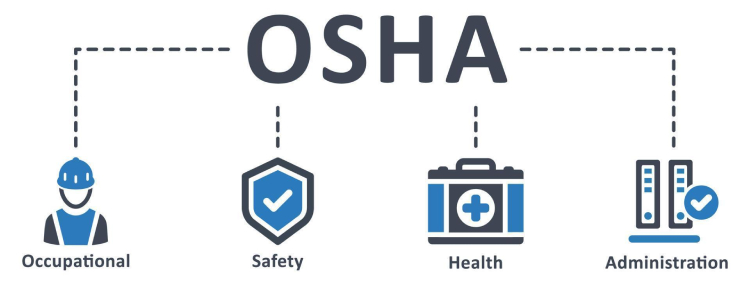
The Occupational Safety and Health Administration (OSHA) has established comprehensive safety requirements across various industries to ensure worker safety and health. This article discusses OSHA requirements relevant to fabrication shops, roofing operations, contractor work, arc flash studies, paint booths, aerosol storage, lab coats, chain hoists, standard operating procedures (SOPs), and warehouse personal protective equipment (PPE).
Fabrication Shops and Contractor Requirements
Fabrication shops and contractors must adhere to OSHA’s general industry standards. These include guidelines for machine guarding, hazardous materials, and PPE.
- Machine Guarding: OSHA mandates that all machinery must have appropriate guards to protect workers from moving parts.
- Hazard Communication: Fabrication shops must maintain a clear hazard communication program. It includes proper labeling, safety data sheets (SDS), and training for employees.
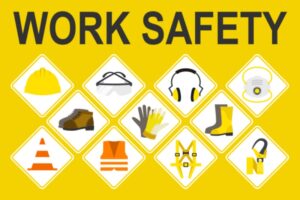
- PPE Requirements: Workers in fabrication environments must wear PPE, such as gloves, safety glasses, and steel-toed boots, to prevent injuries.
For contractors, OSHA requires compliance with general industry standards and specific rules based on the work being performed. Contractors must ensure that employees are trained in the hazards of their work environment and that all OSHA-required safety measures are followed.
Roofing Requirements
Roofing operations present unique hazards, making OSHA’s roofing safety standards essential. OSHA requires:
- Fall Protection: Workers must use fall protection systems, such as guardrails, safety nets, or personal fall arrest systems, whenever they work at heights of six feet or more.
- Ladder Safety: OSHA mandates the proper use of ladders in roofing. Ladders must be on stable, level surfaces and extend at least three feet above the landing point.
- Material Handling: Roofing materials must be handled carefully to prevent falls and injuries. OSHA requires that materials be hoisted rather than carried up ladders whenever possible.
Arc Flash Study Requirements
An arc flash occurs when an electrical current deviates from its intended path and travels through the air, causing a flashover. To mitigate this risk, OSHA requires:
- Arc Flash Risk Assessments: Employers must conduct a comprehensive arc flash study to identify potential hazards. This study assesses the electrical system’s design and determines the necessary protective measures.
- Employee Training: Workers exposed to arc flash risks must receive training on safe work practices, including how to identify hazards and use PPE.
- PPE for Electrical Work: OSHA mandates that employees wear arc-rated clothing, gloves, and face shields when working near energized equipment.
Paint Booth PPE Requirements
Paint booths are common in fabrication shops and require specific safety measures due to the flammable and hazardous nature of paint. OSHA stipulates:
- Ventilation: Proper ventilation in paint booths is essential to prevent the accumulation of flammable vapors.
- Respiratory Protection: Workers must wear appropriate respirators to protect against inhaling harmful fumes. OSHA requires regular fit testing and training for respirator use.
- Protective Clothing: OSHA mandates the use of flame-resistant clothing, gloves, and eye protection when working in paint booths.
Aerosol Storage Requirements
Aerosol products pose a significant fire and explosion risk. OSHA has specific requirements for their storage:
- Storage Areas: Aerosols must be stored in well-ventilated areas away from heat sources. OSHA recommends using flammable storage cabinets designed to contain fires.
- Labeling: All aerosol containers must be labeled according to OSHA’s Hazard Communication Standard. Labels should include information about the contents and potential hazards.
- Inventory Management: Employers must keep an accurate inventory of stored aerosols and ensure that expired or damaged containers are disposed of properly.
Lab Coat Requirements
In environments where hazardous materials are handled, OSHA mandates the use of lab coats to protect workers from chemical splashes and other hazards:
- Material: Lab coats should be made of flame-resistant or chemical-resistant materials, depending on the specific hazards present.
- Fit and Maintenance: Lab coats must fit properly and be kept clean. Employers should provide training on how to don and doff lab coats safely to avoid contamination.
Chain Hoist Inspection Requirements
Chain hoists are commonly used in fabrication shops and construction sites. OSHA requires regular inspections to ensure safe operation:
- Daily Inspections: Operators must perform a visual inspection of chain hoists before each use. This includes checking for wear, deformation, and proper operation.
- Periodic Inspections: A more detailed inspection must be conducted at regular intervals, depending on the hoist’s usage. This inspection includes checking load chains, hooks, and other critical components.
- Documentation: Employers must maintain records of all inspections and repairs, as required by OSHA.
SOP and Warehouse PPE Requirements
Standard Operating Procedures (SOPs) are crucial for maintaining safety and consistency in various operations. OSHA emphasizes:
- SOP Development: Employers must develop and maintain SOPs that cover all significant processes, particularly those involving hazardous materials or equipment.
- Training: Workers must be trained on SOPs and understand their role in ensuring workplace safety.
For warehouse operations, OSHA requires:
- PPE Usage: Workers must wear appropriate PPE, such as safety vests, gloves, and steel-toed boots, to protect against hazards like falling objects or moving vehicles.
- Ergonomics: OSHA encourages the use of ergonomic practices to reduce the risk of musculoskeletal injuries in warehouse environments.
Conclusion
Complying with OSHA requirements is essential for ensuring workplace safety across various industries. By understanding and implementing these guidelines, employers can create safer work environments, protect their employees from hazards, and avoid costly violations. Regular training, proper use of PPE, and adherence to SOPs are key components in maintaining compliance with OSHA standards.