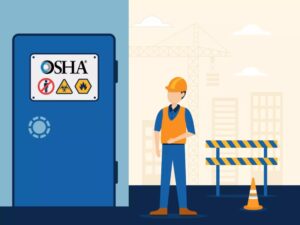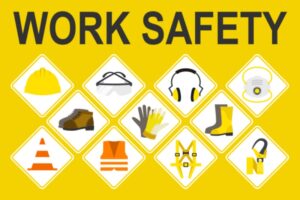




Ensuring workplace safety is paramount for employers, and the Occupational Safety and Health Administration (OSHA) provides detailed regulations to guide this effort. This article offers an in-depth exploration of various OSHA safety requirements, focusing on railings, boom lifts, secondary containment, platforms, roof hatch ladders, safety showers, hard hats, safety vests, and wheel chocks. By adhering to these guidelines, employers can create safer work environments and remain compliant with current OSHA standards, including the latest updates for 2024.
OSHA Railing Requirements
Railings are critical safety features that protect workers from falls, especially in elevated work areas such as platforms, stairs, and walkways. OSHA’s railing requirements are designed to ensure that these protective barriers are both effective and durable.
Key Requirements:
- Height: Railings must be 42 inches high, with a tolerance of plus or minus 3 inches, measured from the working or walking surface.
- Strength: Railings should withstand a force of at least 200 pounds applied in any direction along the top edge.
- Midrails: Required at approximately halfway between the top rail and the walking/working surface if no parapet or wall exists.
- Toeboards: Toeboards are required when there is a risk of objects falling to a lower level, and they must be at least 3.5 inches high.
These regulations are crucial in preventing falls, which are among the most common workplace accidents, particularly in construction and industrial settings.
OSHA Boom Lift Safety Requirements
Boom lifts are commonly used in construction, maintenance, and other industries that require workers to perform tasks at elevated heights. However, their use comes with significant risks, necessitating strict adherence to OSHA’s safety requirements.
Key Requirements:
- Training: Operators must receive proper training and demonstrate proficiency in operating the boom lift safely.
- Fall Protection: Workers must wear personal fall arrest systems, including a harness attached to an anchor point within the lift.
- Pre-Operation Inspection: Boom lifts must be inspected before each use to ensure that they are in safe working condition. This includes checking the tires, lift controls, guardrails, and fall protection systems.
- Stability: The lift must be on a stable, level surface before use, and outriggers, if available, should be deployed.
- Proximity Hazards: Operators must maintain a safe distance from overhead power lines and other potential hazards.
By following these guidelines, employers can minimize the risks associated with boom lift operations, protecting workers from falls and equipment failures.
OSHA Secondary Containment Requirements
Secondary containment is essential in workplaces that store or handle hazardous substances, ensuring that spills or leaks do not lead to environmental contamination or health hazards.
Key Requirements:
- Capacity: Secondary containment systems must be capable of holding at least 110% of the volume of the largest container within the storage area or 10% of the total volume of all containers, whichever is greater.
- Design: The containment system should be impermeable to the stored substance and resistant to damage from leaks or spills.
- Maintenance: Regular inspections and maintenance are required to ensure that the containment systems remain effective over time, free of cracks, and capable of containing spills.
These containment measures are crucial for preventing environmental damage and protecting worker health in industries where hazardous substances are used or stored.
OSHA Stair Requirements
Stairs are a fundamental part of many workplaces, and OSHA provides specific requirements to ensure they are safe for daily use. For detailed information, OSHA often provides downloadable PDFs outlining these requirements, which are essential for compliance.
Key Requirements:
- Stair Width: Stairs must be at least 22 inches wide.
- Riser Height and Tread Depth: Risers should be uniform in height (between 6 and 7.5 inches), and treads should be at least 9.5 inches deep.
- Handrails: Required on stairs with four or more risers, with handrails placed between 30 and 38 inches above the tread nosing.
- Landing: Stairs must have a landing at the top and bottom, and landings should be at least as wide as the stairway and at least 30 inches deep.
These stair requirements ensure that employees can move safely between levels, reducing the risk of trips and falls.
OSHA Platform Requirements
Platforms are common in many industrial and construction settings, providing elevated work surfaces for various tasks. OSHA’s platform requirements are designed to ensure these structures are safe and secure.
Key Requirements:
- Guardrails: Platforms over 4 feet above the ground or floor must have guardrails on all open sides.
- Load Capacity: Platforms must be able to support at least four times the intended load.
- Access: Safe access to platforms must be provided, such as ladders or stairs that meet OSHA’s specifications.
- Toeboards: Toeboards are required on platforms when there is a risk of objects falling off the edge.
These requirements help prevent falls and ensure that platforms can safely support workers and equipment.

OSHA Roof Hatch Ladder Requirements
Roof hatches provide access to rooftop areas, often via ladders. OSHA has specific requirements to ensure that these ladders and hatches are safe for use.
Key Requirements:
- Ladder Design: Fixed ladders used to access roof hatches must extend at least 42 inches above the roof hatch opening to provide a secure handhold.
- Fall Protection: A fall protection system, such as a ladder safety device, is required if the ladder height exceeds 24 feet.
- Hatch Guardrails: Roof hatches must be equipped with guardrails or a hatch cover that provides fall protection when the hatch is open.
- Clearance: Adequate clearance around the roof hatch is required to ensure safe entry and exit.
These requirements ensure that workers can safely access rooftops, reducing the risk of falls and related injuries.
OSHA Safety Shower Requirements
Safety showers and eye wash stations are critical in workplaces where workers are exposed to hazardous chemicals. OSHA’s requirements ensure that these facilities are accessible and functional in emergencies.
Key Requirements:
- Location: Safety showers must be located within 10 seconds of the hazard area, typically not more than 55 feet away.
- Flow Rate: Showers must deliver a minimum of 20 gallons per minute (GPM) of water for at least 15 minutes.
- Water Temperature: The water should be tepid, usually between 60-100В°F, to ensure it does not cause further harm to the injured worker.
- Maintenance: Regular testing and maintenance are required to ensure the showers function correctly when needed.
By adhering to these requirements, employers can ensure that workers have access to immediate decontamination in the event of exposure to hazardous substances.
New OSHA Hard Hat Requirements 2024
Head protection is critical in many workplaces, and OSHA has updated its hard hat requirements for 2024 to address emerging safety concerns.
Key Updates:
- Impact Resistance: Hard hats must meet updated ANSI/ISEA Z89.1-2024 standards, ensuring they provide adequate protection against both top and lateral impacts.
- Electrical Protection: Hard hats must be rated for electrical insulation if used in environments with electrical hazards, classified as Class G (General) or Class E (Electrical) for higher voltage protection.
- Fit and Comfort: The 2024 updates emphasize the importance of proper fit and comfort, encouraging employers to provide hard hats with adjustable suspension systems and adequate ventilation.
These updates ensure that hard hats provide maximum protection in modern work environments, addressing both impact and electrical hazards.
OSHA Safety Vest Requirements
Safety vests are a critical component of personal protective equipment (PPE), particularly in environments where visibility is essential for worker safety.
Key Requirements:
- Visibility: Safety vests must meet the ANSI/ISEA 107 standard for high-visibility apparel, ensuring workers are visible in low-light and high-traffic conditions.
- Colors: Vests should be in fluorescent colors such as orange, yellow, or lime green, with reflective strips to enhance visibility.
- Durability: Vests should be durable and resistant to tearing or damage in harsh work environments. They should also be washable to maintain visibility over time.
These requirements ensure that workers are visible and protected, reducing the risk of accidents, particularly in construction zones and road work areas.
OSHA Wheel Chock Requirements
Wheel chocks are used to prevent vehicles or trailers from moving unintentionally, particularly during loading and unloading. OSHA’s wheel chock requirements are designed to prevent such accidents.
Key Requirements:
- Material: Wheel chocks must be made from durable materials capable of withstanding the weight of the vehicle or trailer.
- Size and Fit: Chocks must be appropriately sized to fit the tires of the vehicle or trailer being secured.
- Placement: Chocks should be placed firmly against the tires, with at least one chock on each side of the wheel if on an incline.
- Inspection: Regular inspections should be conducted to ensure that wheel chocks are not damaged and remain effective.
These requirements help prevent accidents caused by vehicle or trailer movement, ensuring the safety of workers during loading and unloading operations.
Conclusion
Adhering to OSHA’s comprehensive safety standards, from railings and boom lifts to safety showers and hard hats, is essential for maintaining a safe workplace. The regulations outlined above cover a wide range of potential hazards, providing employers with the guidelines necessary to protect their workers and remain compliant with OSHA’s evolving standards, including the new updates for 2024.
By regularly reviewing and updating safety practices in accordance with OSHA’s requirements, employers can create a safer, more efficient work environment that minimizes the risk of accidents and injuries. Regular training, inspections, and adherence to these regulations are critical for ensuring ongoing compliance and the safety of all employees.